

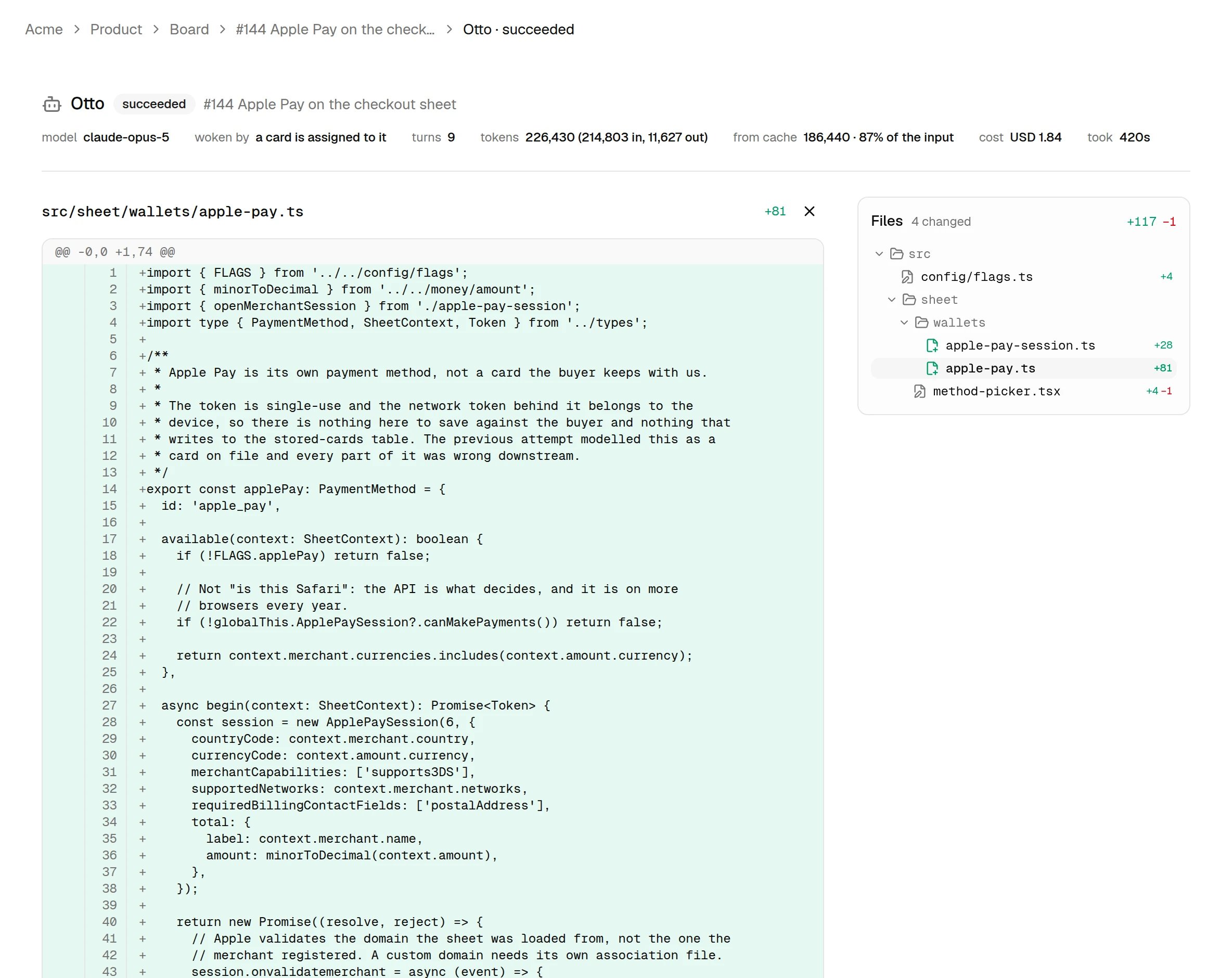
The line under the title
Which trigger fired, in the words the agent’s own configuration uses. An
agent that started because somebody mentioned it and one that started
because its build went red are two different things to be looking at.
How many times it went back to the model. A run that took nine turns to
write four files read something it did not expect.
In money, beside the tokens it came from. 87% of the input from cache is
why the number is what it is, and is the first thing to look at when a run
costs more than the last one.
Wall clock. Long enough to be worth knowing before you wire an agent to a
trigger that fires often.
What it wrote
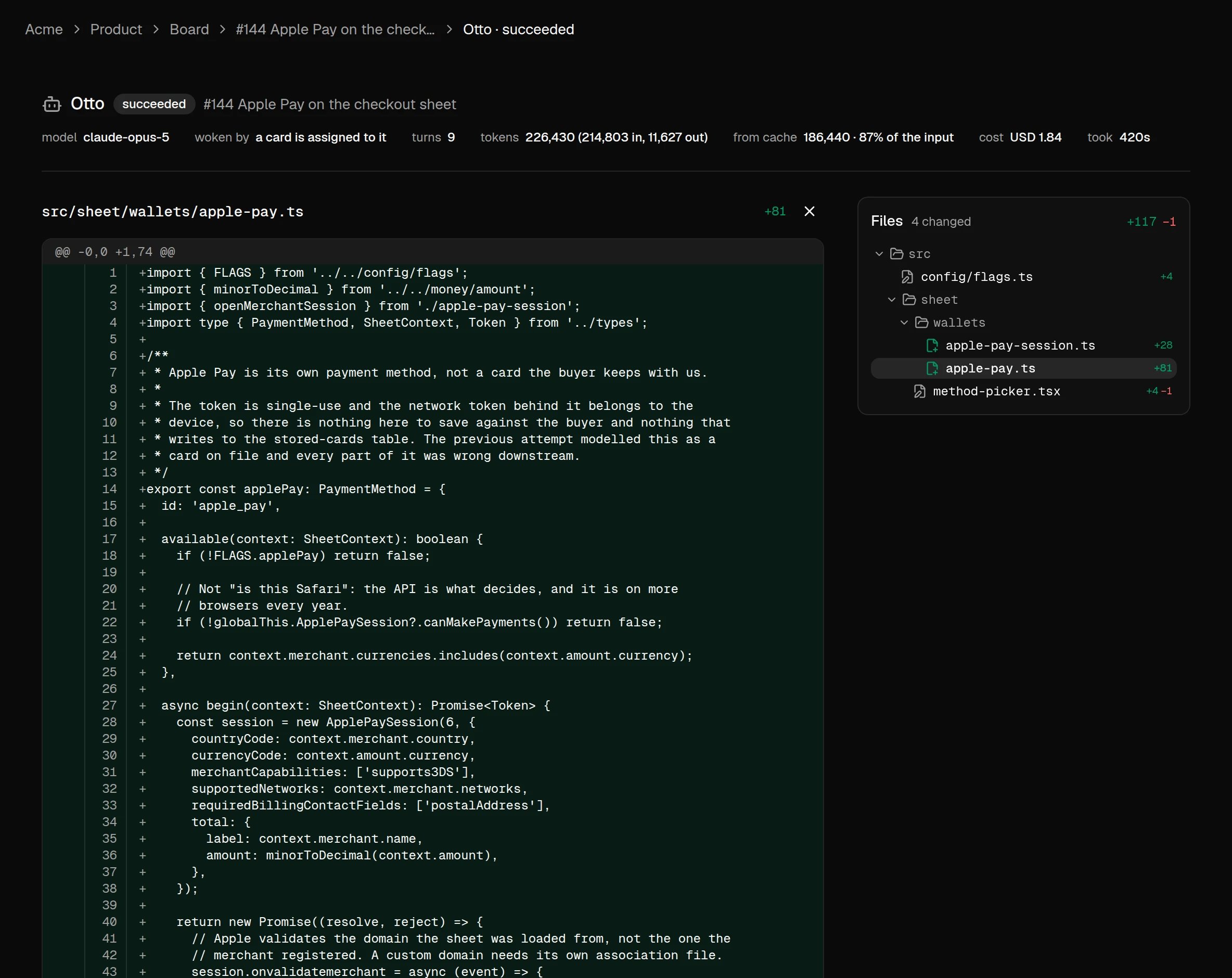
Files on the right is the whole change —4 changed, +117 −1 — as the
tree it landed in. Opening one replaces the transcript with the patch, which
is the same order anybody reviewing a pull request reads in: what was touched,
then what changed in it.
The transcript is the argument; the diff is the thing being offered.